


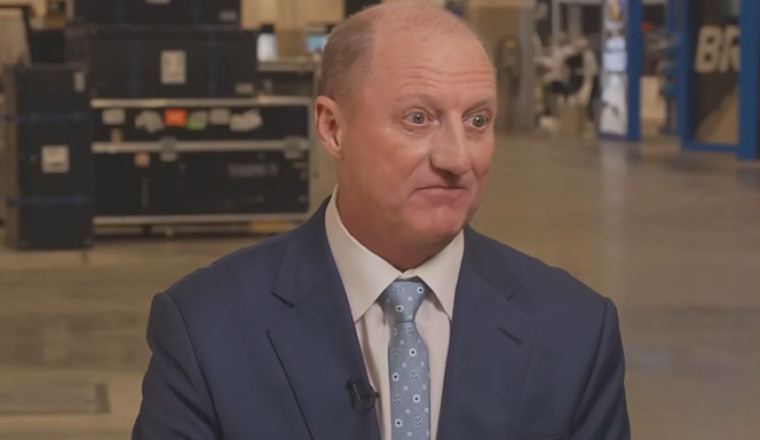
Warren Buffett, the sage of Omaha and a stalwart of traditional investing, has always maintained a prudent distance from the latest technological fads. His investment philosophy revolves around a well-defined "circle of competence," where he focuses on industries and companies he understands deeply. With Buffett stepping down as CEO of Berkshire Hathaway at the beginning of this year, his successor, Greg Abel, is now at the helm. During the recent shareholder meeting in Omaha, Abel conveyed a similar cautious stance regarding the burgeoning field of artificial intelligence (AI).
As the audience gathered at the CHI Health Center, Business Insider’s Theron Mohamed captured Abel’s remarks that clearly delineated Berkshire Hathaway’s approach to AI. Unlike tech titans like Elon Musk of Tesla, Sam Altman of OpenAI, and Mark Zuckerberg of Meta, who are pouring billions into AI development, Abel emphasized that Berkshire Hathaway would not indulge in AI for its own sake. “We’re not going to do AI for the sake of AI,” he stated, underscoring the necessity for any technological adoption to be genuinely beneficial and additive to the company’s existing operations.
Abel’s remarks reflect a strategic mindset that prioritizes value creation over trend-chasing. He said that while Berkshire’s subsidiaries would explore AI applications, these would be implemented carefully, focusing on areas where they can deliver real, practical benefits. This approach aligns with the long-standing philosophy that has defined Berkshire Hathaway under Buffett’s leadership, a focus on long-term value rather than short-term hype.
In the days leading up to the meeting, Business Insider spoke with the CEOs of several Berkshire subsidiaries, including See’s Candies, Dairy Queen, Brooks Running, and Jazwares. These leaders shared their perspectives on AI, revealing a spectrum of enthusiasm for its potential. While they acknowledged the technology’s ability to improve efficiency and save time, their use of it remains grounded in practical applications rather than speculative ambition.
The investment community is divided on the implications of AI. Some, including Shark Tank star Kevin O’Leary and fund manager Ross Gerber, have dismissed concerns that the current AI excitement mirrors the dot-com bubble of the late 1990s. They argue that AI is driving measurable productivity gains and strong profit growth, suggesting it is more than just a passing trend.
On the other hand, cautionary voices such as Michael Burry, known for his prescient bet against the housing market in The Big Short, and veteran investor Jeremy Grantham have warned of a possible AI bubble. They argue that current enthusiasm may be excessive and could lead to a sharp correction with significant consequences for markets.
In this complex landscape, Greg Abel’s leadership offers a measured counterpoint to the excitement surrounding AI. By prioritizing a careful, disciplined approach, he not only continues Buffett’s legacy but also positions Berkshire Hathaway to adapt to technological change without losing its core principles. This focus on prudence and long-term value may serve the conglomerate well as it gradually explores AI across its portfolio.
As Berkshire Hathaway moves forward, it remains to be seen how the company will balance innovation with its foundational investment principles. The cautious optimism expressed by Abel and the subsidiary CEOs suggests openness to change, but only when it clearly serves practical business needs.










Comments
0 comment